CJR Sensor — Engineering Delivery Brief (PRJ-AUTO-01)
Shenzhen CJR Electronics Co., Ltd. (Client identity anonymized per NDA)
sales@robotlyne.com / +86 135 1081 6743
https://sensolyne.com/case-studies/automotive-coolant-ntc-turnkey-line/
Automotive Coolant NTC Sensor 3-Section Smart Line (OP140–OP360)
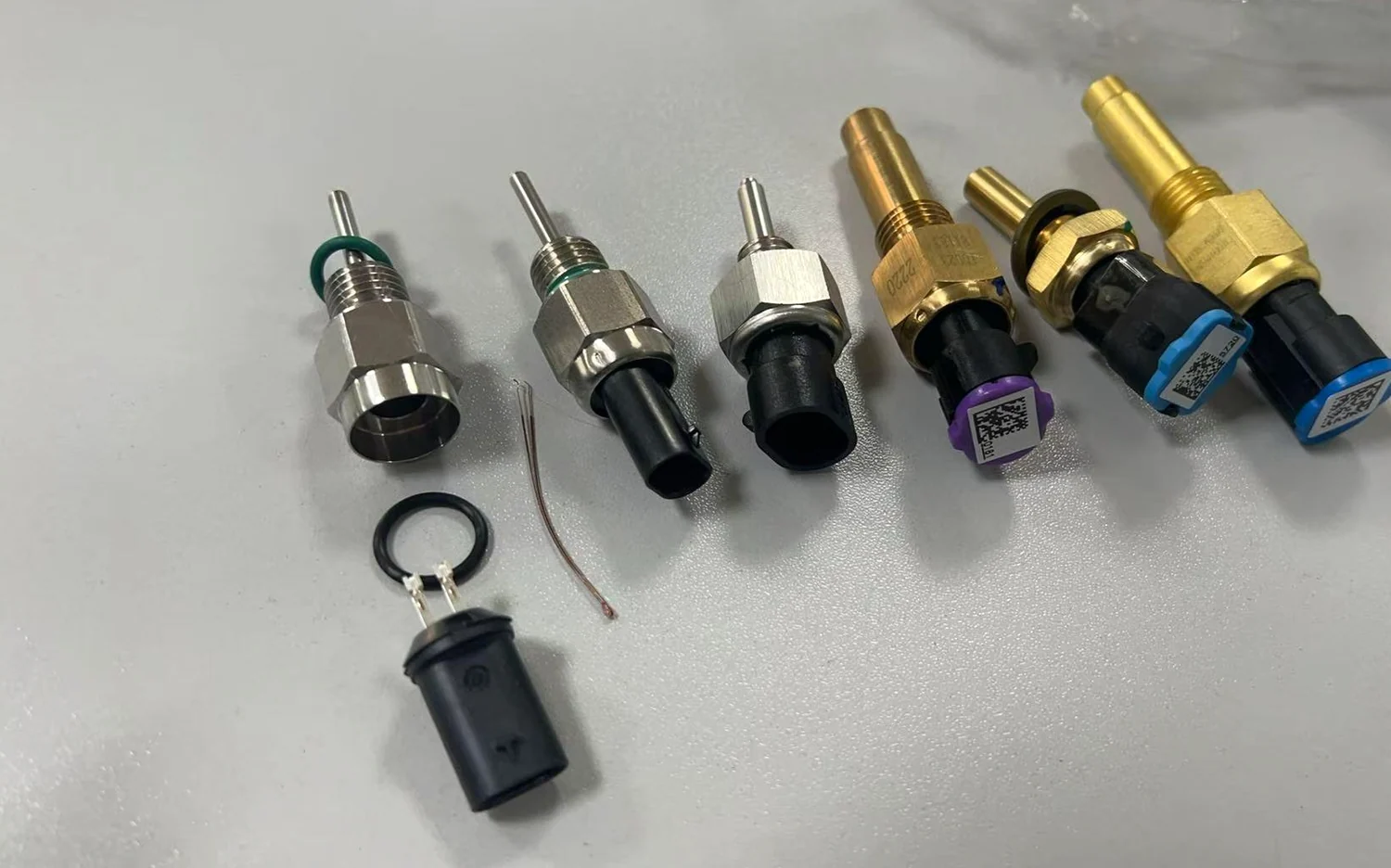
5 threaded automotive coolant NTC variants · Metal, PBT+GF30, PPS+GF30 & PP+GF30 housings
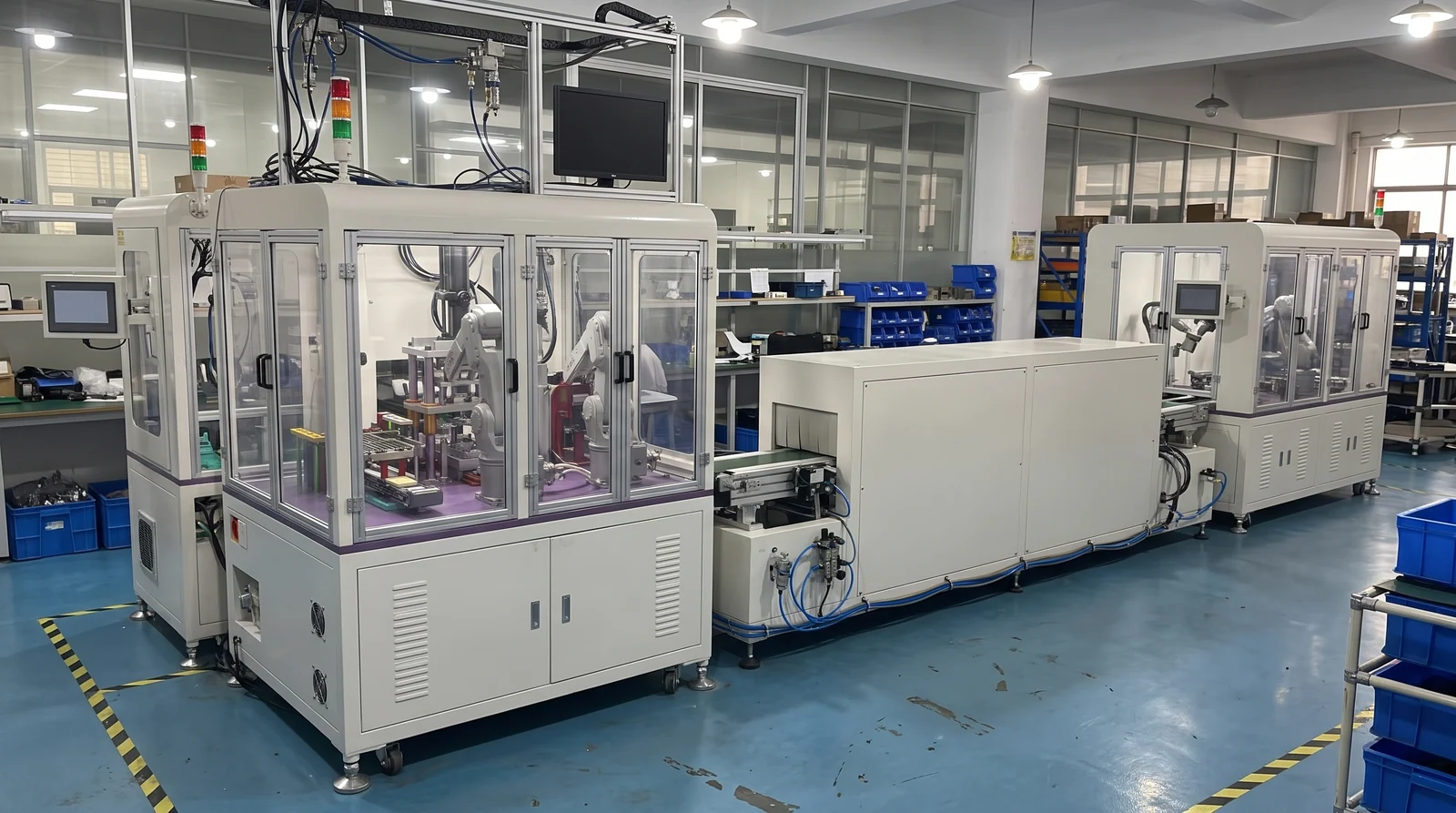
Delivered a three-section modular rotary line (OP140–OP360) with quick-change hexagonal pallets across 5 coolant sensor models—combining closed-loop DC welding, pre/post-dispense epoxy weighing, 5T force-monitored riveting, 3-axis laser marking, and 100V Hi-Pot + reference-matched resistance binding.
- ≤5 sec / pc
- Welding Cell Takt
- ≤15 sec / pc
- Front / Rear Takt
- 240–260 PCS/H · 6 Ops
- Line Output / Crew
- 1:1 Laser QR to R-T
- Traceability
Engineering gallery
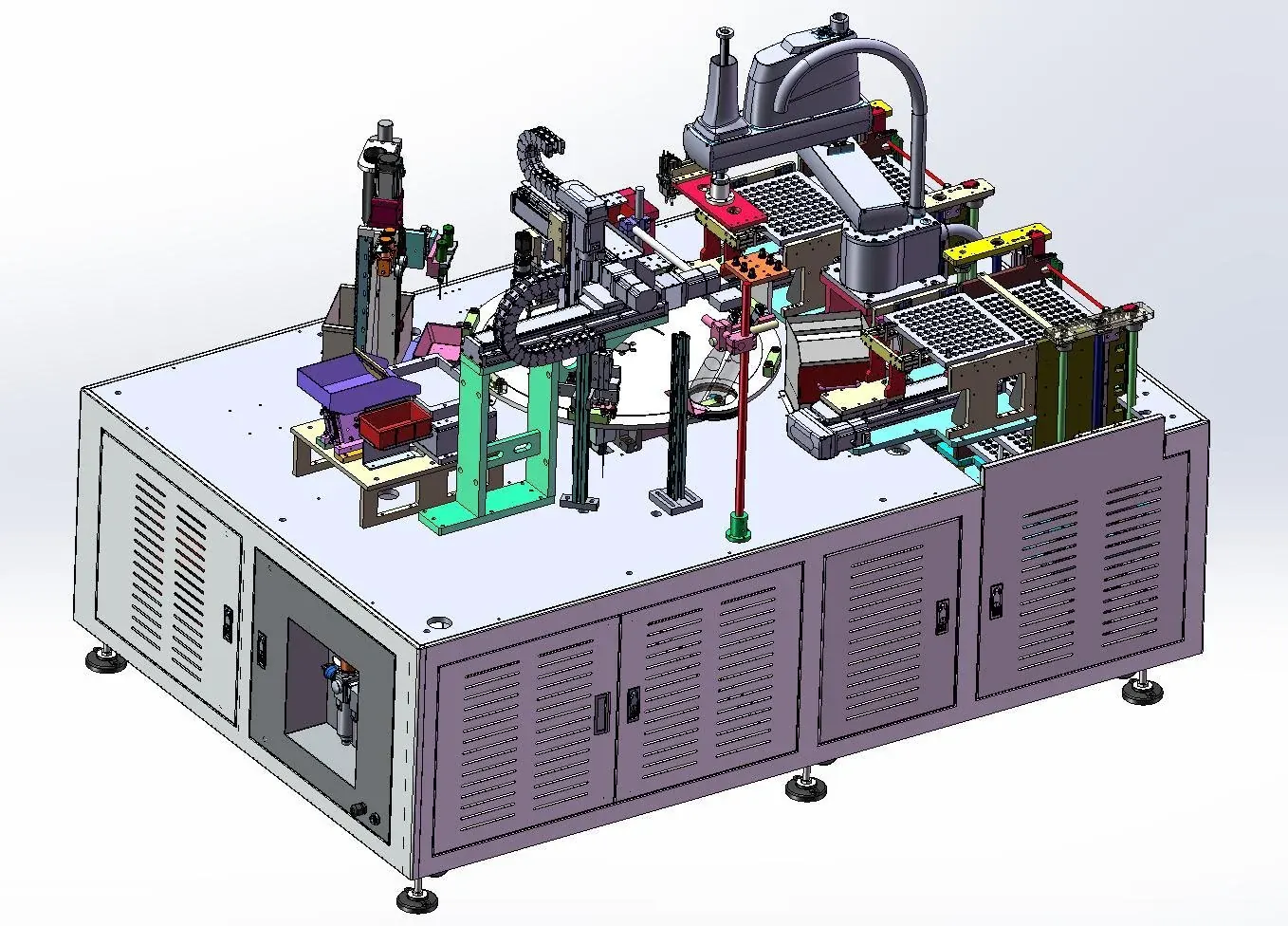
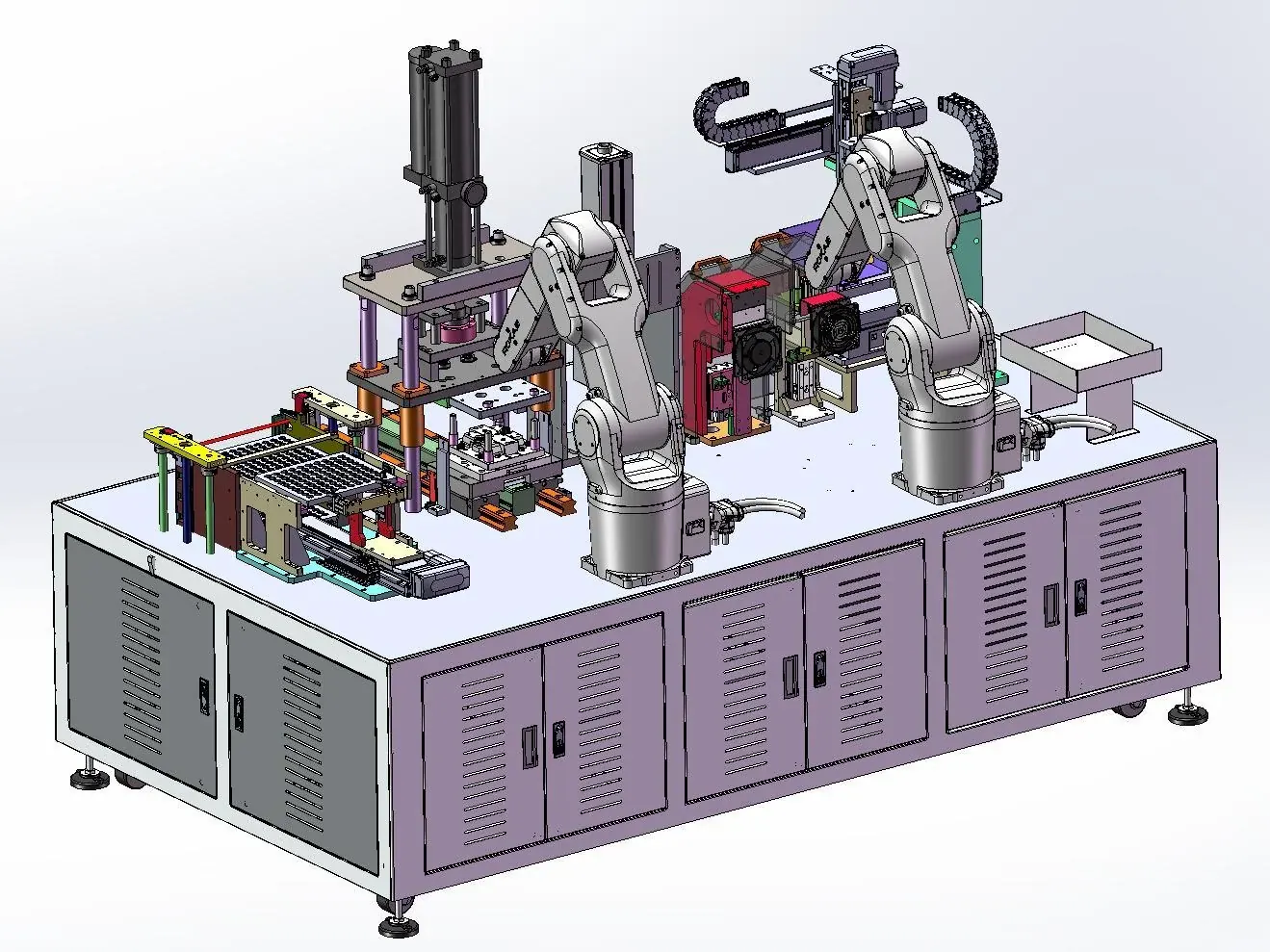
Real customer-grade samples, tooling fixtures, and CAD station layouts with zero third-party identifiers.
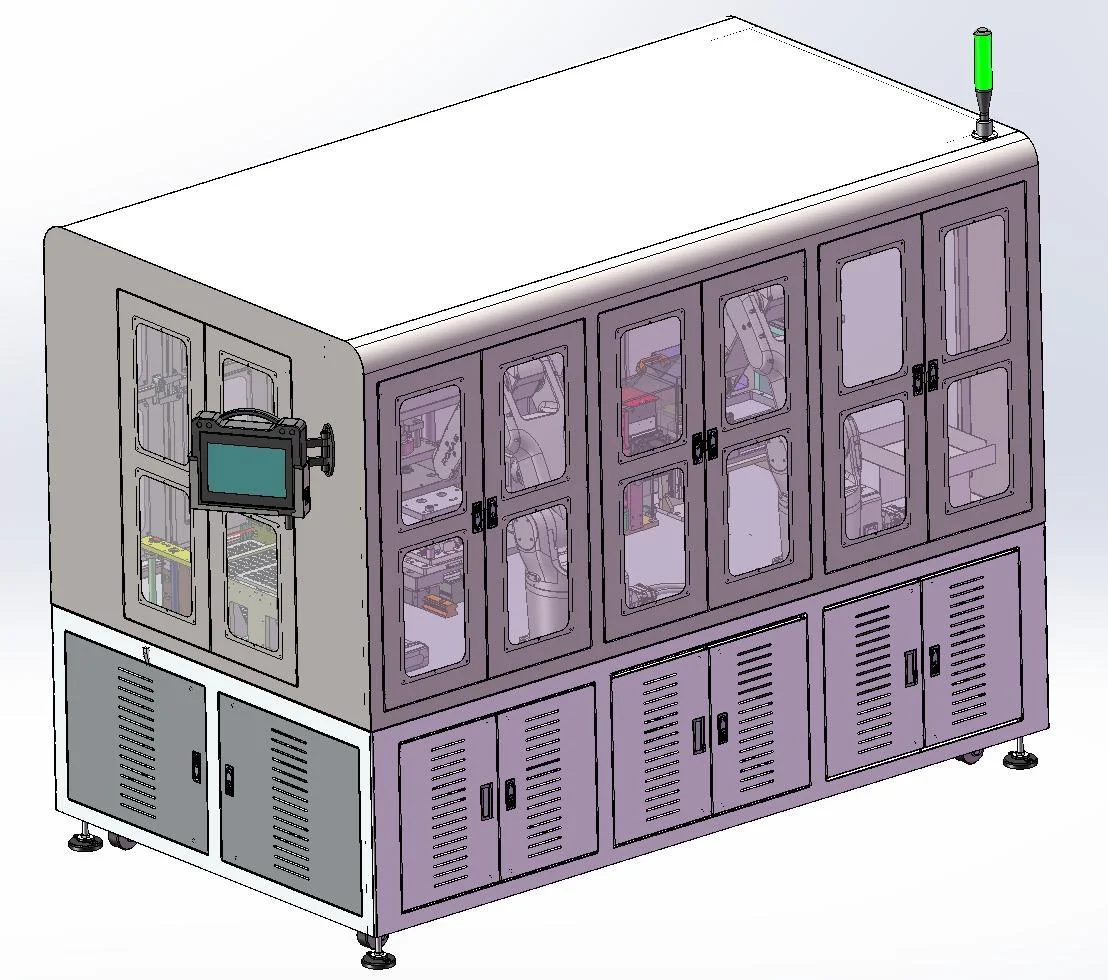
Station architecture and quality gates
6 connected process stages engineered for repeatable cycle time and inline verification.
- OP140–OP160 ≤5 s/pc (1 Op)
Connector Feed, Vision Pre-Check & Programmable Pin Crimp
Quality gate: CCD confirms centered lead seating before crimp jaw closes
- OP165–OP180 ≤5 s/pc
DC Resistance Welding, Deep-Learning CCD & Continuity Sort
Quality gate: Axial & radial pull force ≥ raw NTC lead tensile strength
- OP200–OP220 ≤15 s/pc (1 Op)
Hex-Pallet Housing Load & Inline-Weighed High-Temp Potting
Quality gate: Online precision scale checks weight BEFORE and AFTER every dispense
- OP240–OP260 80°C/10m + 150°C/30m
Inner O-Ring, 3-Point Force-Controlled NTC Insertion & Cure
Quality gate: Dual-stage programmable oven curve logged per curing batch
- OP280–OP300 ≤15 s/pc (1 Op)
5T Servo Riveting & 3-Axis Lockable Laser Marking
Quality gate: 100% force-displacement envelope monitoring + code grade verify
- OP320–OP360 ≤15 s/pc · 6-Axis Robot
100V Hi-Pot, 4.02kΩ Reference R-T Test & Outer O-Ring
Quality gate: Resistance & Hi-Pot pass/fail bound 1:1 to laser serial QR in MES
Before vs. after workshop economics (4 metrics)
| Metric | Manual baseline | Automated line | Operational impact |
|---|---|---|---|
| Total Crew per Shift | 14–16 manual operators across isolated benches | 6 operators (3 tending machines + 3 logistics/QA) | 60% labor reduction |
| Epoxy Weight Assurance | Random destructive teardown checks once/shift | 100% inline pre- & post-dispense precision weighing | Zero under-filled probes |
| Riveting & Crimping Control | Pneumatic press with zero force feedback | 5T servo force-stroke curve + anti-crush pin crimp | Eliminates crushed housings |
| IATF 16949 Traceability | Batch-level paper traveler cards | 1:1 QR serial linked to weld, weight, rivet & R-T | Instant OEM audit pass |
Footprint, utilities and technical parameters (7 specs)
| Engineering parameter | Verified specification |
|---|---|
| Section Footprints (L×W×H) | Weld: 2,100×1,000×1,950 mm · Front: 2,270×1,500×1,950 mm · Rear: 2,600×1,500×1,950 mm |
| Conveyor / Aisle Reference | 7,000 × 2,000 × 1,600 mm overall turnkey layout |
| Product Compatibility | 5 low-temp automotive sensor models via quick-change hexagonal pallets |
| Dispensing System | 3-axis M-control + AP-III pneumatic controller + fiber auto-align + lint-free wiper + dual-roller ball mill bench |
| Curing Profile | Programmable thermal box: 80°C × 10 min preheat → 150°C × 30 min full cure |
| Electrical Test Spec | 24V–500V (100V spec) shell Hi-Pot + co-located golden-sample ambient R-T (4.02 kΩ pull-up) |
| Utilities & Control | AC220V / 380V (480V export option) · 0.6–0.8 MPa clean air · PLC + Host PC + Deep-Learning Vision + 6-Axis Robot |
Detailed station notes, root bottlenecks and Shenzhen FAT criteria
Root bottlenecks solved
- Pin crimping crushed fragile NTC leads or allowed lateral shift during hand welding.
- Missing or under-dosed high-temp probe epoxy went undetected until thermal-lag field failures.
- Manual pneumatic staking lacked stroke-force verification and could not link serial marks to test logs.
Shenzhen FAT acceptance gates
- NTC weld axial & radial pull force verified ≥ NTC lead tensile strength with zero glass damage.
- Pre/post epoxy weighing alarms verified against intentionally under-dosed test housings.
- 5T servo staking curve pass/fail envelope validated across all 5 quick-change sensor variants.
- 100% 1:1 MES database binding verified between laser-etched DataMatrix serials and Hi-Pot/resistance records.
Full station engineering breakdown
OP140–OP160
Connector Feed, Vision Pre-Check & Programmable Pin Crimp
Auto connector pallet loading + manual NTC load (auto-load space reserved), optical alignment check, adjustable pin crimp with anti-crush stripper mechanism.
OP165–OP180
DC Resistance Welding, Deep-Learning CCD & Continuity Sort
Single-point DC inverter weld per stroke, deep-learning camera inspection of weld nugget, and room-temp continuity check with separate weld-NG / R-NG reject chutes.
OP200–OP220
Hex-Pallet Housing Load & Inline-Weighed High-Temp Potting
3-axis M-controller + AP-III pneumatic dispensing with long stainless needle, optical fiber auto needle alignment after cartridge swap, and indexed lint-free cloth nozzle wiping.
OP240–OP260
Inner O-Ring, 3-Point Force-Controlled NTC Insertion & Cure
Auto inner O-ring feeding (multi-size compatible), vision-guided 3-point force/position NTC insertion into potted shell, and hex-slot high-temp curing tray transfer.
OP280–OP300
5T Servo Riveting & 3-Axis Lockable Laser Marking
Spring-held connector staking via 5T servo electric cylinder (split-mold Half-Die upgradable), followed by X/Y/Z laser DataMatrix marking on iron, aluminum, PBT/PPS/PP+GF30.
OP320–OP360
100V Hi-Pot, 4.02kΩ Reference R-T Test & Outer O-Ring
24V–500V (100V spec) shell insulation withstand test, co-located golden-sample ambient air resistance test (4.02 kΩ pull-up logic), outer O-ring placement & tray unload.
Equipment used in PRJ-AUTO-01
Turnkey line family
Automotive & EV SensorsRelated engineering guides
More Automotive & EV cases
All 17 cases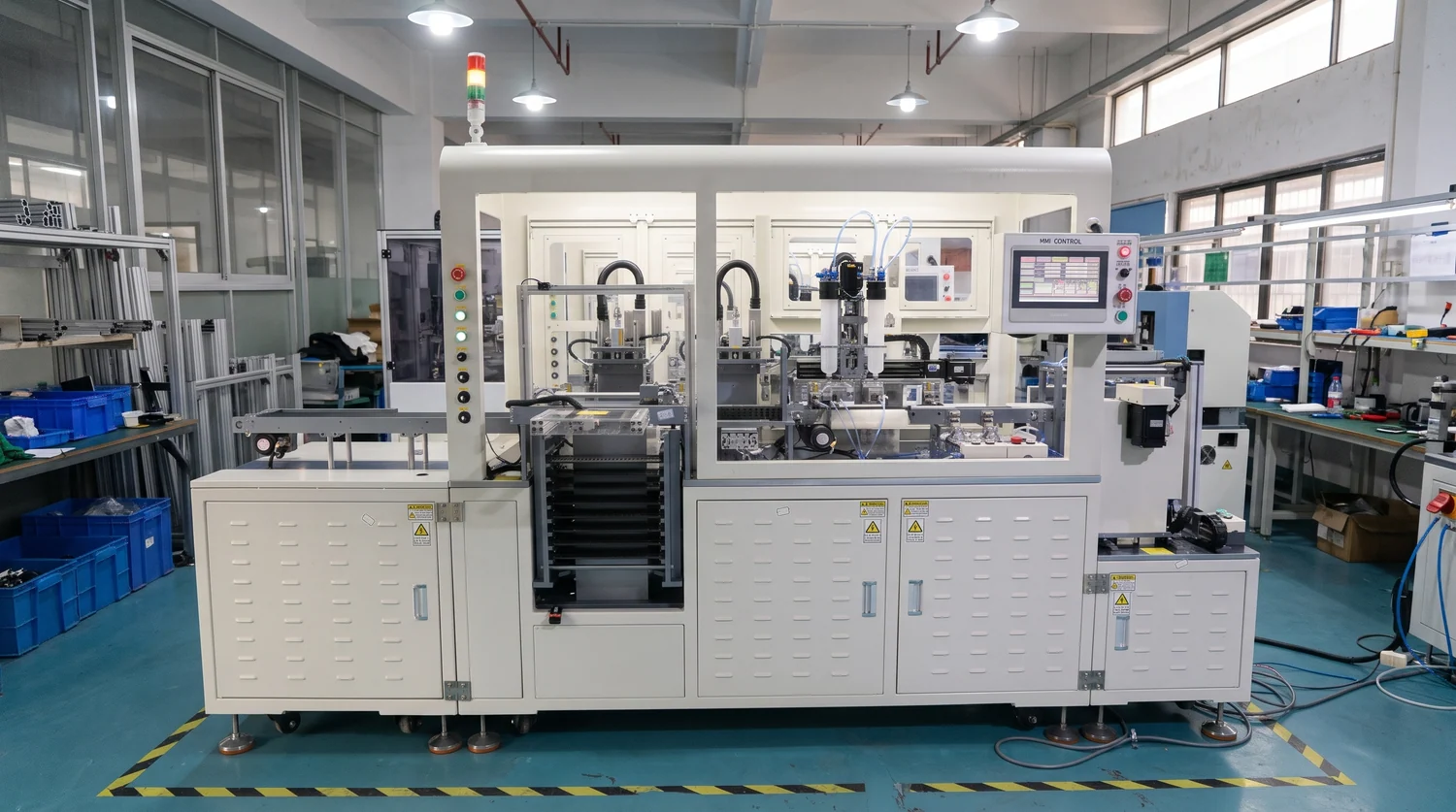
EV Drive-Motor Temperature Sensor 8-Module Line (22,000 PCS/Day)
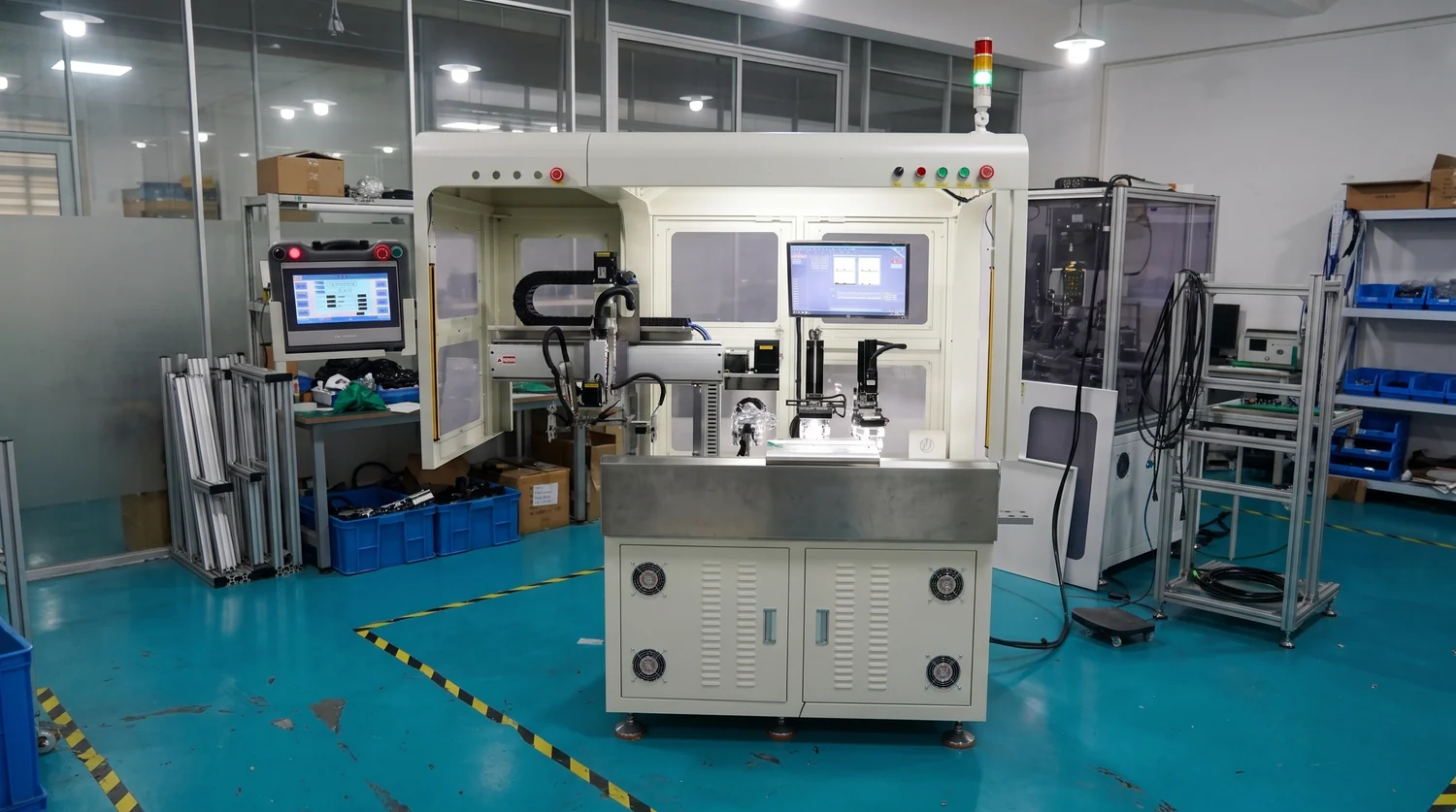
CR-726A Multi-View CCD Vision Cell for Automotive Oil Temp Sensors
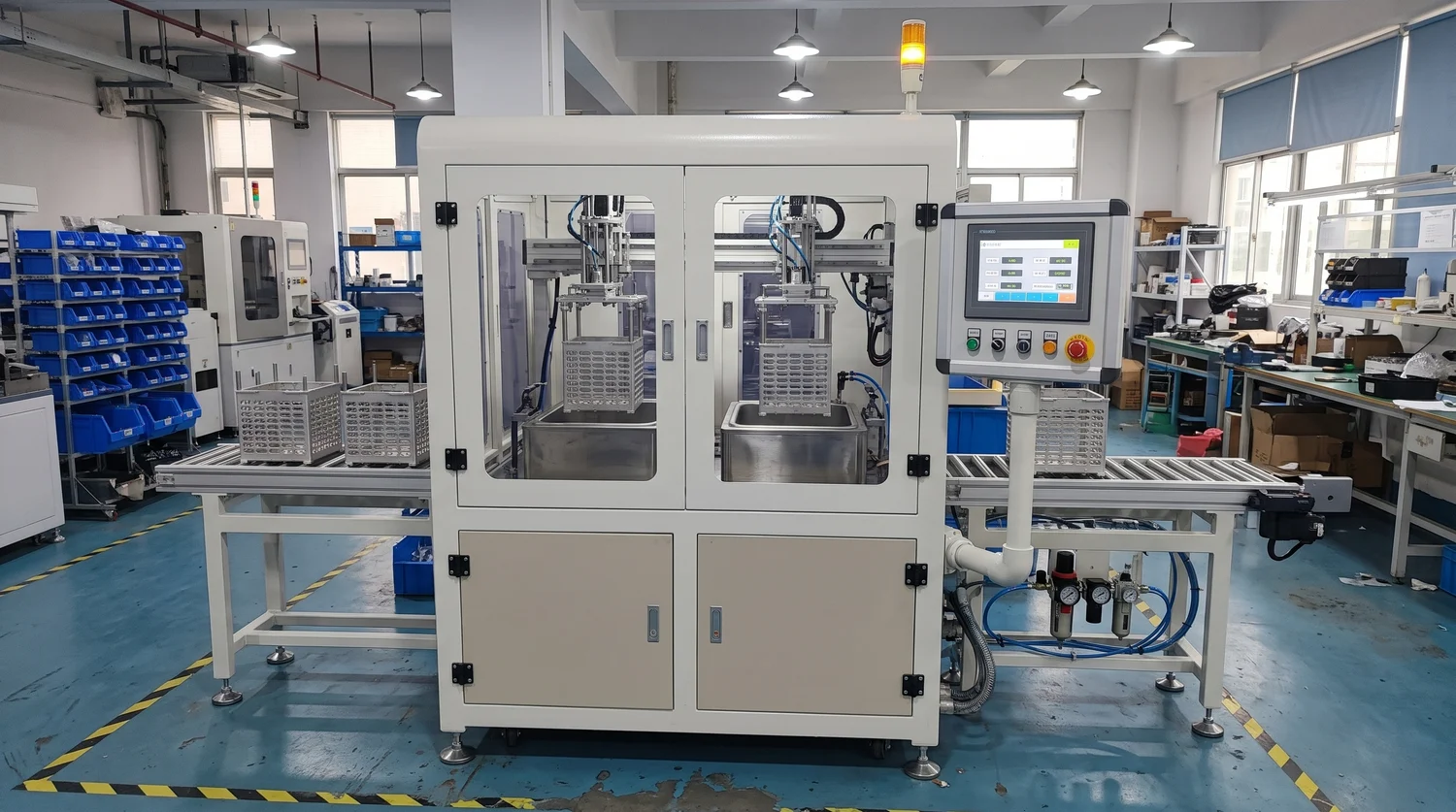
Dual-Bath (0°C & 25°C) Resistance Tester for Automotive Oil Sensors
Direct OEM engineering desk in Shenzhen and Kunshan
Need a line similar to PRJ-AUTO-01?
Share your sensor drawing and target daily output for a 48-hour layout and payback estimate.