CJR Sensor — Engineering Delivery Brief (PRJ-EV-02)
Shenzhen CJR Electronics Co., Ltd. (Client identity anonymized per NDA)
sales@robotlyne.com / +86 135 1081 6743
https://sensolyne.com/case-studies/ev-drive-motor-temperature-sensor-line/
EV Drive-Motor Temperature Sensor 8-Module Line (22,000 PCS/Day)
EV traction motor stator NTC probes · 50–1,500 mm parallel leads · Dual silicone + epoxy encapsulation
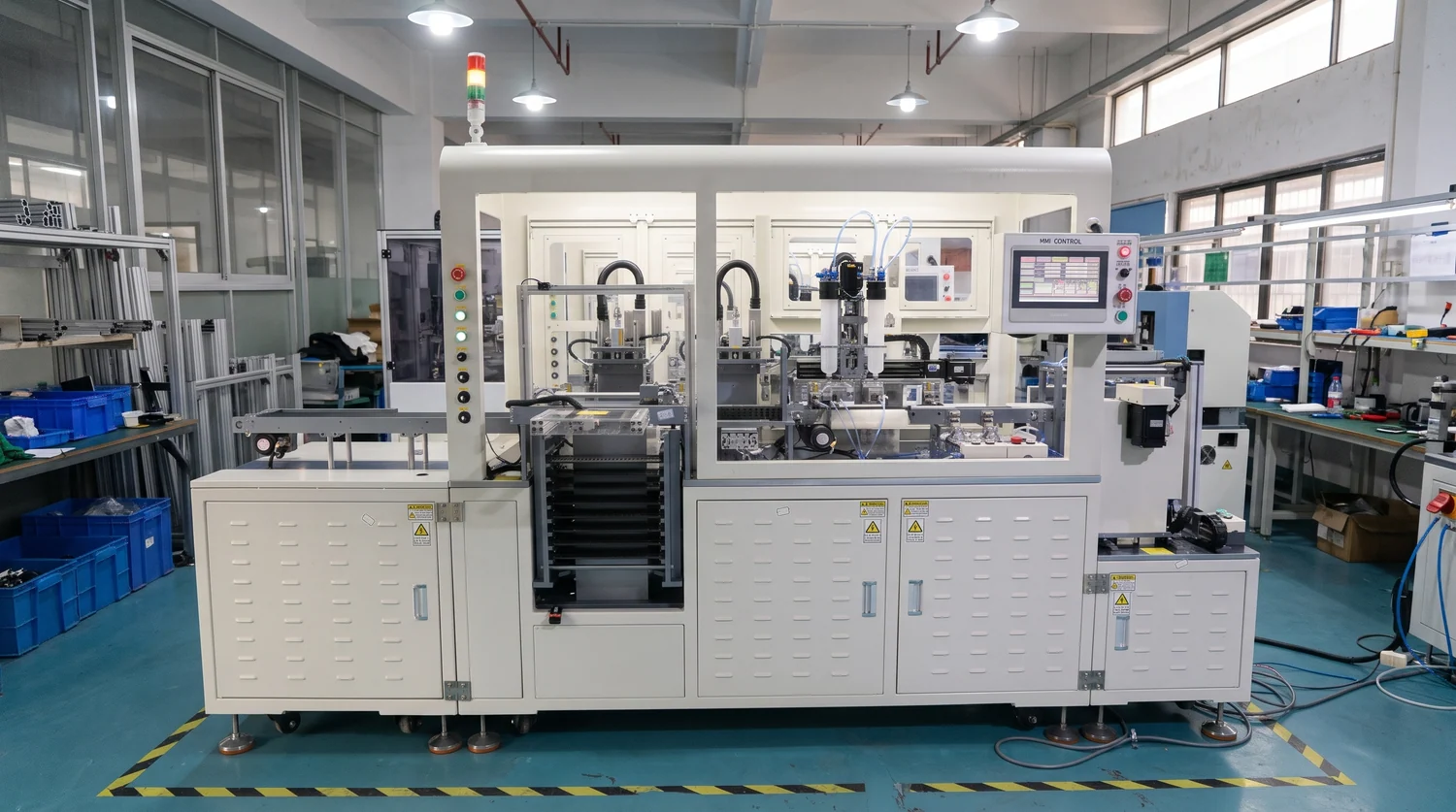
Engineered an 8-module carrier-board production line replacing 7 manual workshop sections—linking 5-reel wire prep, dual-station NTC welding, optional AI CCD, 14,000 PCS/H silicone coating, dual tunnel curing, 2-valve epoxy potting, parallel terminal crimping, and 25°C/85°C Hi-Pot sorting.
- 20,000–22,000 PCS
- 10h Shift Output
- 7 Operators
- Total Line Crew
- 10,000–14,000 PCS/H
- Silicone Coating
- 25°C & 85±1°C + Hi-Pot
- EOL Thermal Test
Engineering gallery
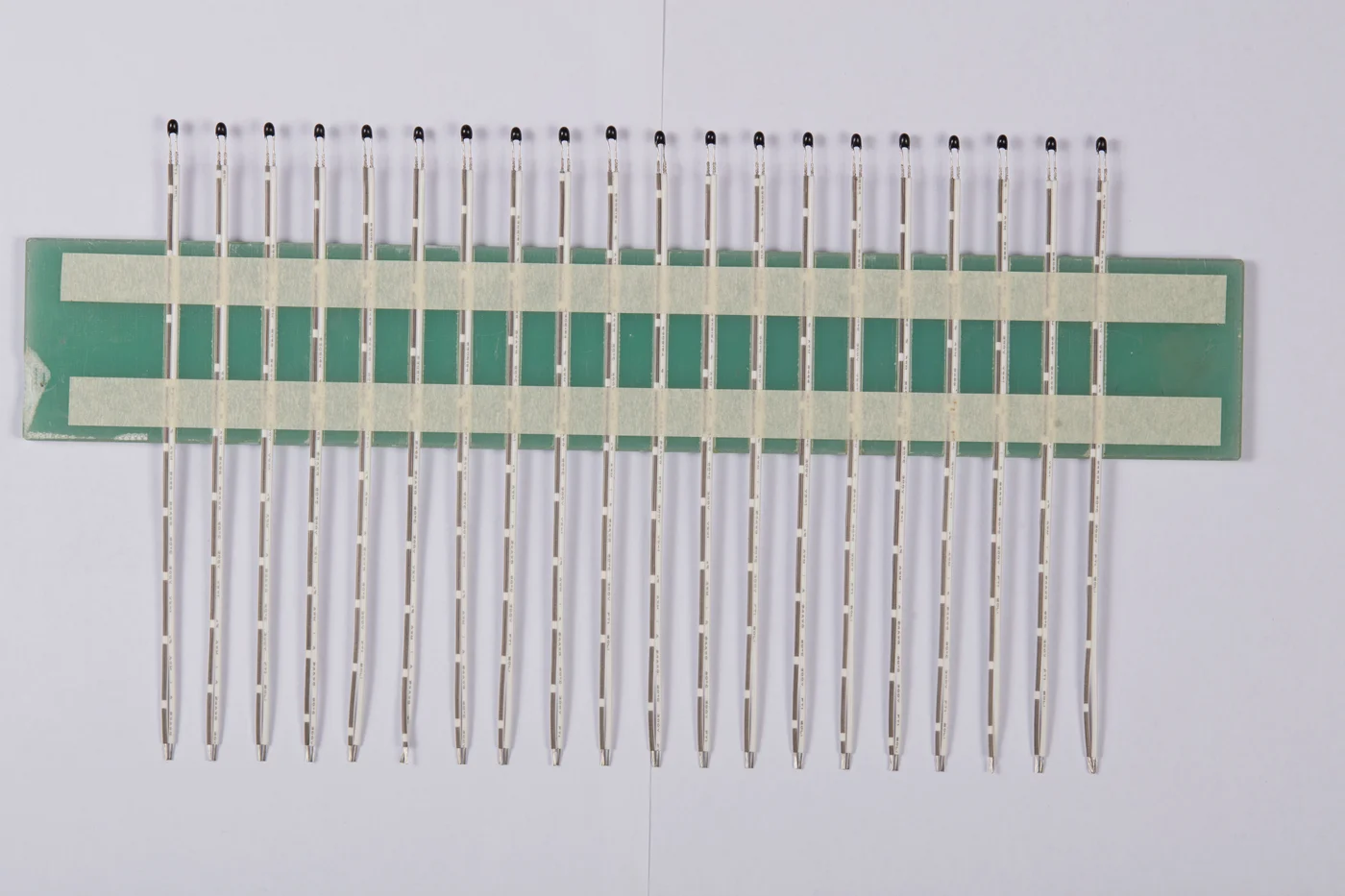
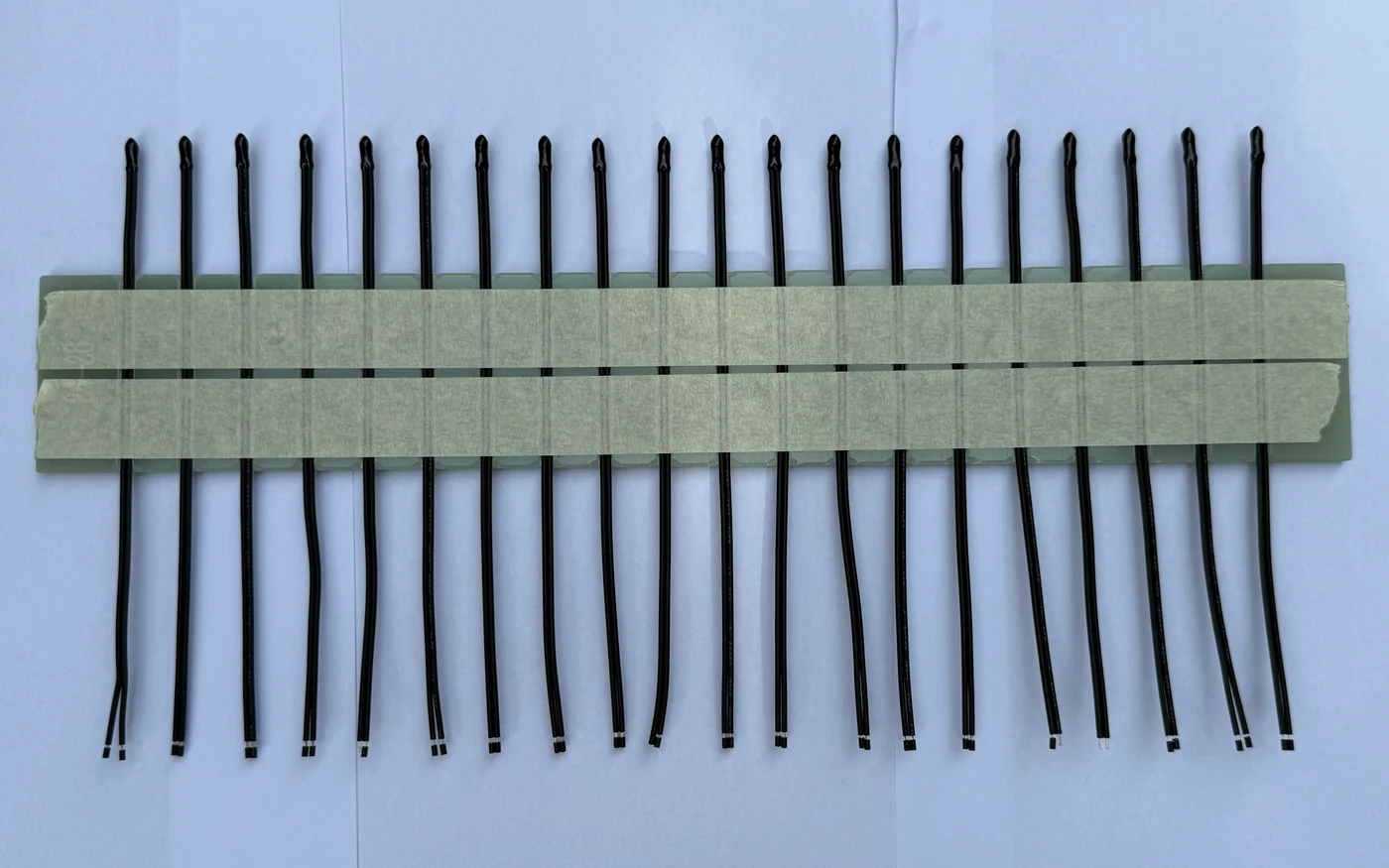
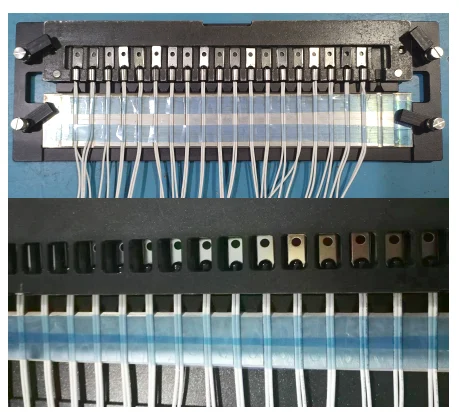
Real customer-grade samples, tooling fixtures, and CAD station layouts with zero third-party identifiers.
Station architecture and quality gates
7 connected process stages engineered for repeatable cycle time and inline verification.
- ST-01 2,000–2,200 PCS/H
5-Reel Wire Cutting, Stripping, Tinning & Carrier Boarding
Quality gate: Inline CCD verifies strip length & carrier pitch; cuts 2 operators
- ST-02 1,600–2,000 PCS/H
Dual-Station NTC Resistance Welding
Quality gate: Closed-loop weld positioning eliminates manual lead skew
- ST-03 1,800–2,400 PCS/H
Optional Multi-Camera AI CCD Post-Weld Inspection
Quality gate: Replaces 2–3 manual microscope inspectors with zero eye fatigue
- ST-04 10,000–14,000 PCS/H
High-Speed Silicone Dip Coating + Primary Tunnel Oven
Quality gate: Uniform silicone film thickness prevents thermal shock cracking
- ST-05 1,800–2,500 PCS/H
Shell Insertion, 2-Valve Epoxy Potting & Secondary Curing
Quality gate: Void-free resin fill locked to exact shell tip geometry
- ST-06 800 PCS/H × 2 Units
Parallel Terminal Crimping & Connector Housing Cells (×2)
Quality gate: Inline continuity & pull-check blocks loose terminals before EOL
- ST-07 1,800–2,000 PCS/H
Integrated Hi-Pot, 25°C & 85±1°C Water-Bath Testing Line
Quality gate: 100% dual-temp R-T/Beta verification + automatic NG separation
Before vs. after workshop economics (4 metrics)
| Metric | Manual baseline | Automated line | Operational impact |
|---|---|---|---|
| Total Direct Operators | 18–22 manual workers across 7 bench zones | 7 operators overseeing all 8 automated modules | ~65% labor savings |
| Silicone Coating Labor | 3.5 manual dipping & rack-loading workers | 0.4 operator running 10,000–14,000 PCS/H coater | 3 operators saved on 1 step |
| Carrier Circulation Flow | Loose bundled wires tangled between steps | 2,000 standardized boards (1,000 active + 1,000 return) | Zero manual re-racking damage |
| High-Voltage & R-T Proof | Manual Hi-Pot + spot-checked bath readings | 100% inline Hi-Pot + 25°C & 85±1°C PC-logged sorting | Full EV OEM batch compliance |
Footprint, utilities and technical parameters (7 specs)
| Engineering parameter | Verified specification |
|---|---|
| Daily Shift Target | 20,000–22,000 finished EV motor sensors per 10-hour shift |
| Wire & Harness Range | 5-reel simultaneous feed · 50–1,500 mm wire lengths |
| Carrier Board Inventory | 2,000 standardized wire boards (1,000 active online + 1,000 baking/return cycle) |
| Potting Fixture Inventory | 1,000 3-plate shell-positioning potting fixture sets (20 PCS/board) |
| Line Balance Architecture | 1× Wire Prep + 1× Weld + 1× Shared Coater + 1× Potting + 2× 800 PCS/H Terminal Cells + 1× EOL Tester |
| EOL Electrical Test Suite | High-voltage dielectric withstand + 25°C & 85±1°C precision water-bath resistance + auto NG pick |
| Control & Data System | PLC + Host-Computer PC database collection with exportable batch reports |
Detailed station notes, root bottlenecks and Shenzhen FAT criteria
Root bottlenecks solved
- Manual tinning, hand-welding, and dip-coating benches required 18+ workers and introduced bent leads.
- Re-racking loose harnesses between coating, potting, and testing caused frequent insulation nicks.
- Single-point room-temperature checking missed 85°C Beta-curve drift required by EV motor OEMs.
Shenzhen FAT acceptance gates
- Wire prep + dual-station welding verified continuously at ≥2,000 PCS/H on customer motor harness reels.
- Dual-valve epoxy potting confirmed void-free across 3-layer shell fixtures after secondary tunnel curing.
- EOL test line validated for ±1°C bath stability at 85°C and 100% automatic rejection of seeded NG probes.
- Complete 7-operator line staffing balance demonstrated during multi-hour Shenzhen FAT run.
Full station engineering breakdown
ST-01
5-Reel Wire Cutting, Stripping, Tinning & Carrier Boarding
Handles 50–1,500 mm leads continuously: payoff → cut → strip → flux → tin → board load → tape → inline CCD verify → discharge.
ST-02
Dual-Station NTC Resistance Welding
Uses standardized wire carrier boards directly from ST-01; 1 operator tends boarding + welding modules together.
ST-03
Optional Multi-Camera AI CCD Post-Weld Inspection
Deep-learning optical inspection on 20–30 board magazines checking weld offset, cold joints, and missing heads.
ST-04
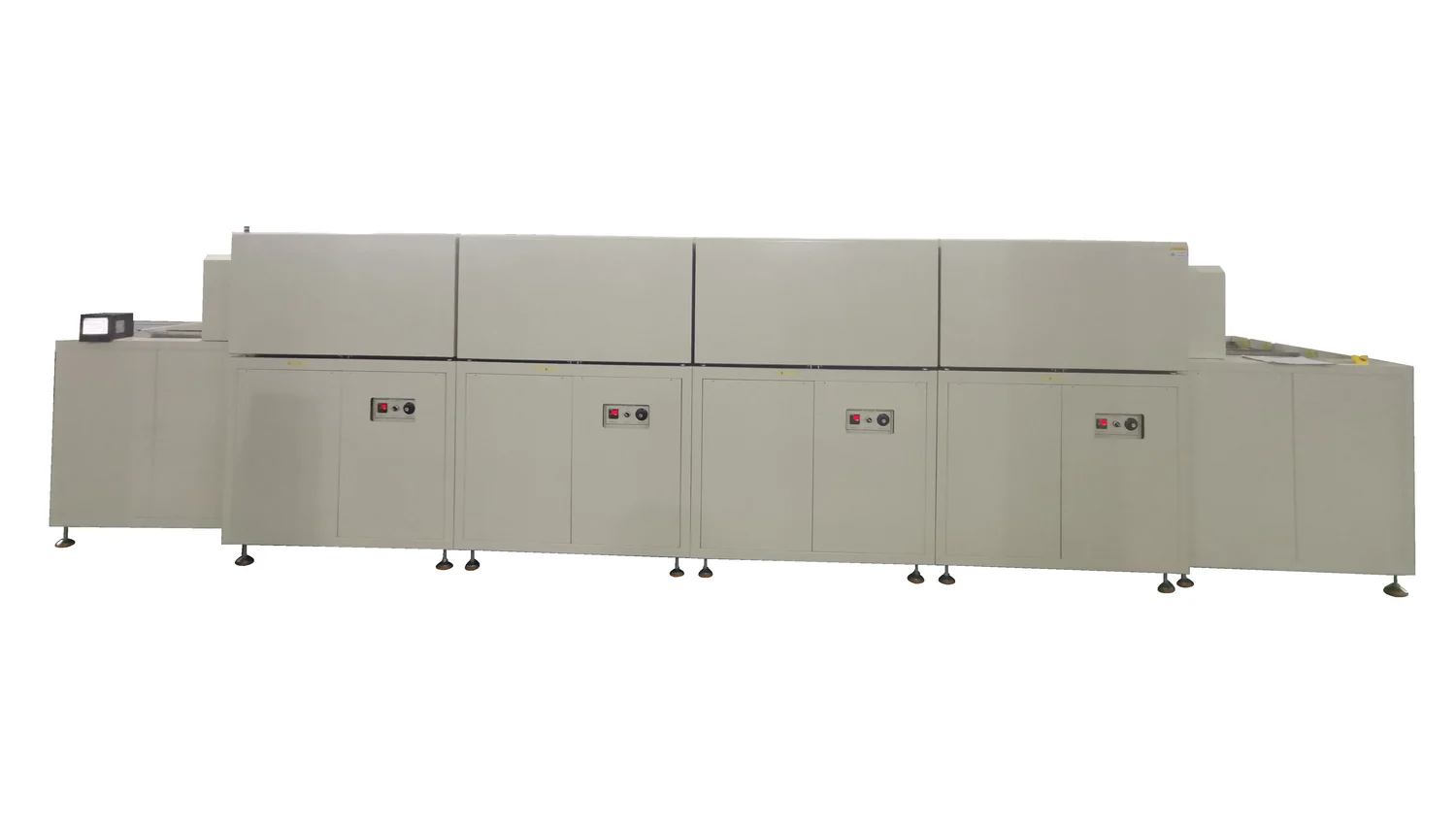
High-Speed Silicone Dip Coating + Primary Tunnel Oven
0.4-operator shared unit completes 40,000 coats (1st & 2nd pass) in 4 hours; 20-piece boards transfer straight to adjustable tunnel oven.
ST-05
Shell Insertion, 2-Valve Epoxy Potting & Secondary Curing
Dual dispensing valves paired with 1,000 precision 3-layer shell-positioning fixture sets (bottom, middle locate, cover plate) + tunnel cure.
ST-06
Parallel Terminal Crimping & Connector Housing Cells (×2)
Each modular cell integrates 1P wire stripping, terminal crimping, rubber-shell insertion, and inline resistance verification (1 op/cell).
ST-07
Integrated Hi-Pot, 25°C & 85±1°C Water-Bath Testing Line
Head positioning → high-voltage insulation test → 25°C bath R-T → 85±1°C bath R-T → PC database logging → auto NG picking → buffer unload.
Equipment used in PRJ-EV-02
Turnkey line family
Automotive & EV SensorsRelated engineering guides
More Automotive & EV cases
All 17 cases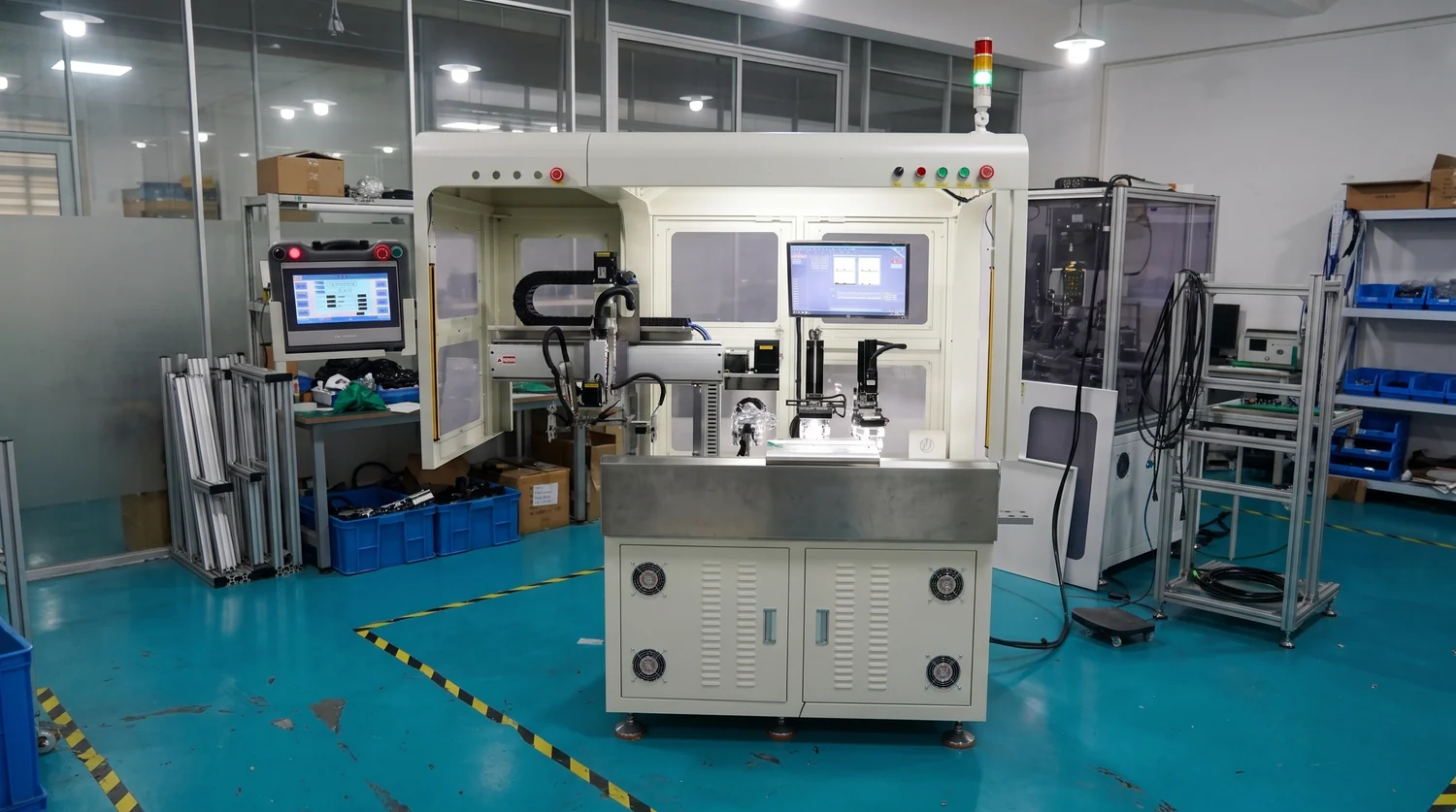
CR-726A Multi-View CCD Vision Cell for Automotive Oil Temp Sensors
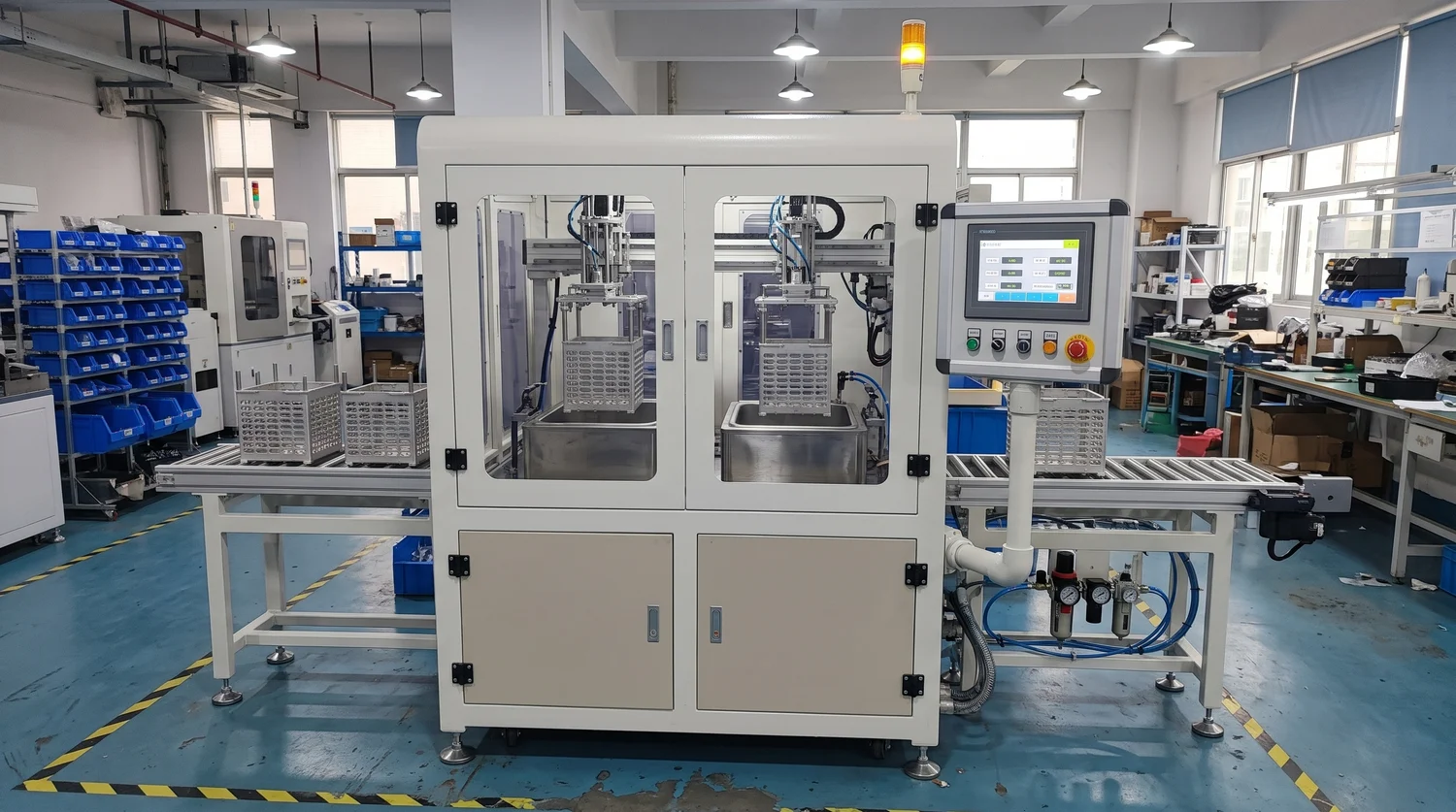
Dual-Bath (0°C & 25°C) Resistance Tester for Automotive Oil Sensors
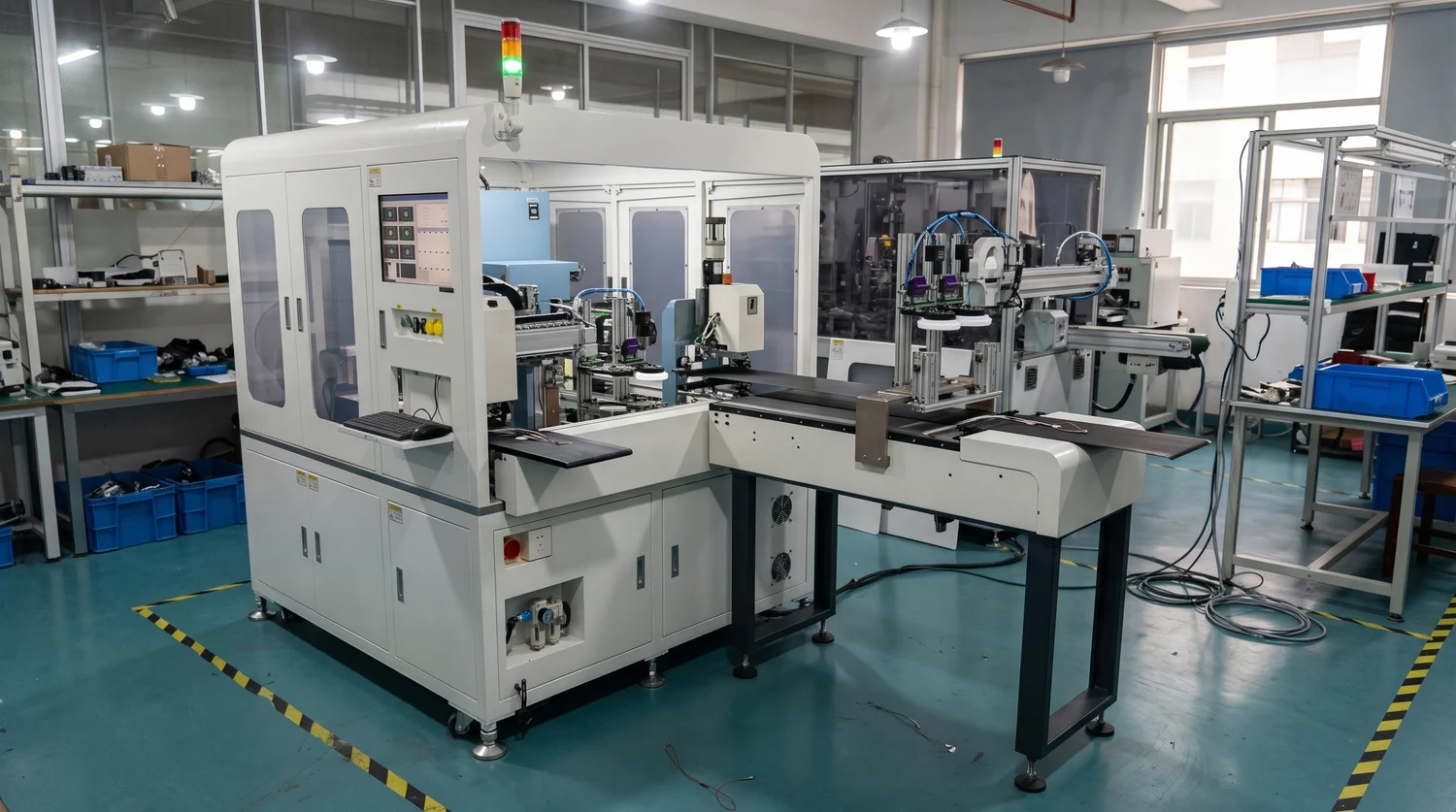
Finished NTC Sensor 4-View CCD Appearance Inspection Cell (1,800 PCS/H)
Direct OEM engineering desk in Shenzhen and Kunshan
Need a line similar to PRJ-EV-02?
Share your sensor drawing and target daily output for a 48-hour layout and payback estimate.